
Galápagos Wildlife Explorer
A field guide for curious travelers of every age. Meet the animals of the islands, learn one wild fact, and tick off the wildlife you spot along the way.
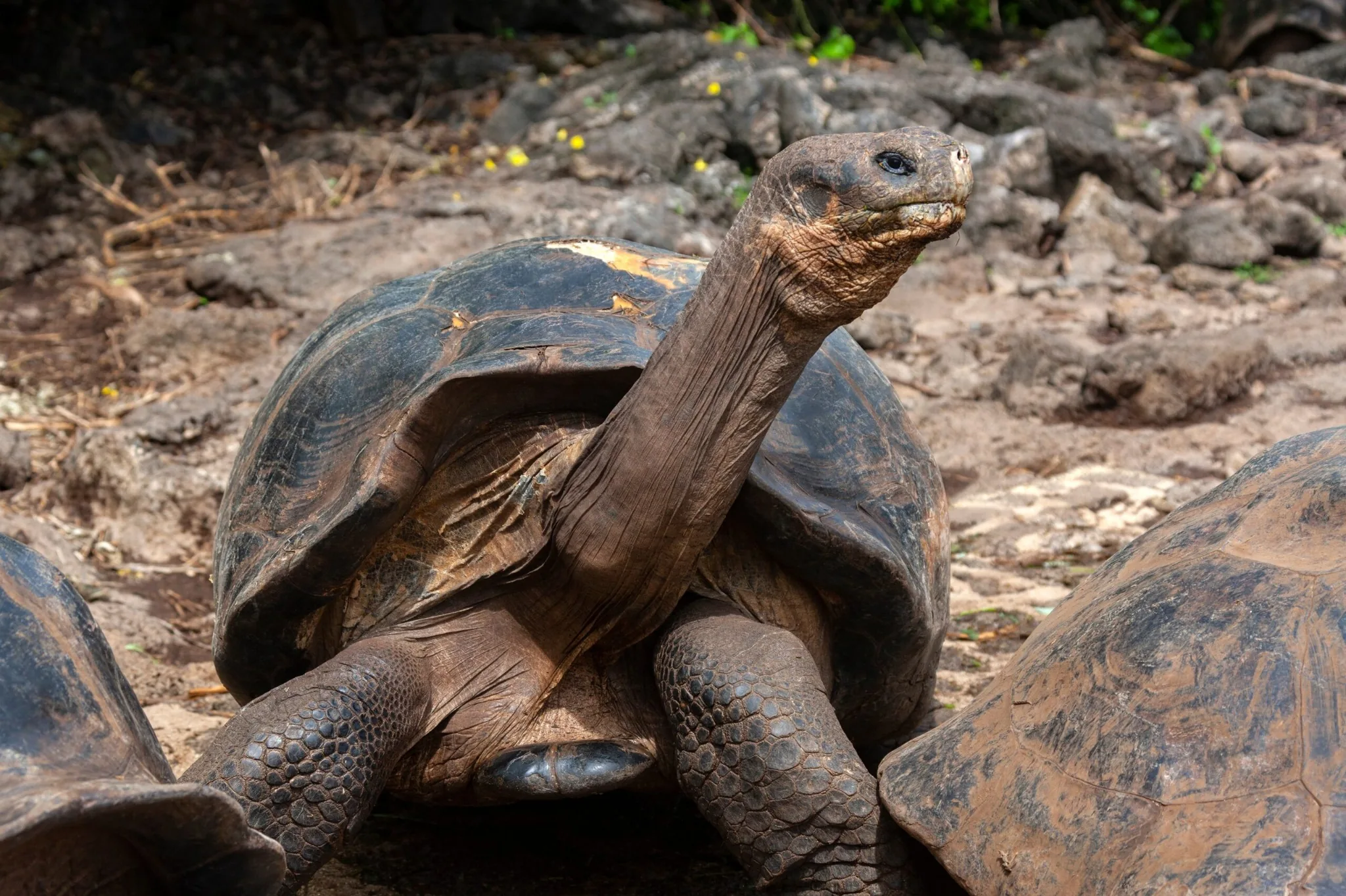
Giant Tortoise
The living symbol of the islands, giant tortoises move slowly through green highlands and dry forests. Their shell shape can vary from island to island. Some can live for more than a century.
Wild fact: They can go months with very little food or water.
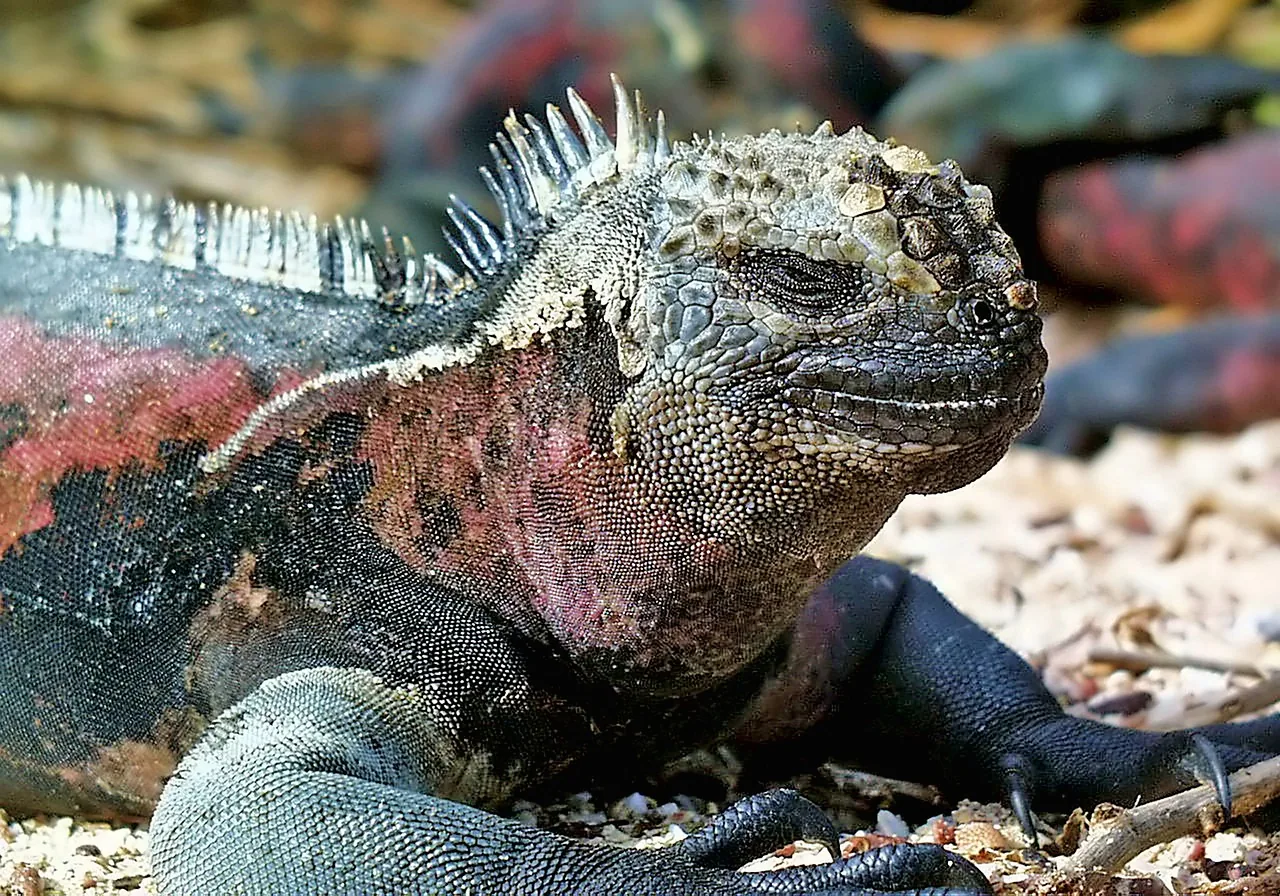
Marine Iguana
The only lizard in the world that feeds in the ocean. It dives into the waves to graze algae, then warms itself on black lava rocks.
Wild fact: It sneezes salt through its nose.
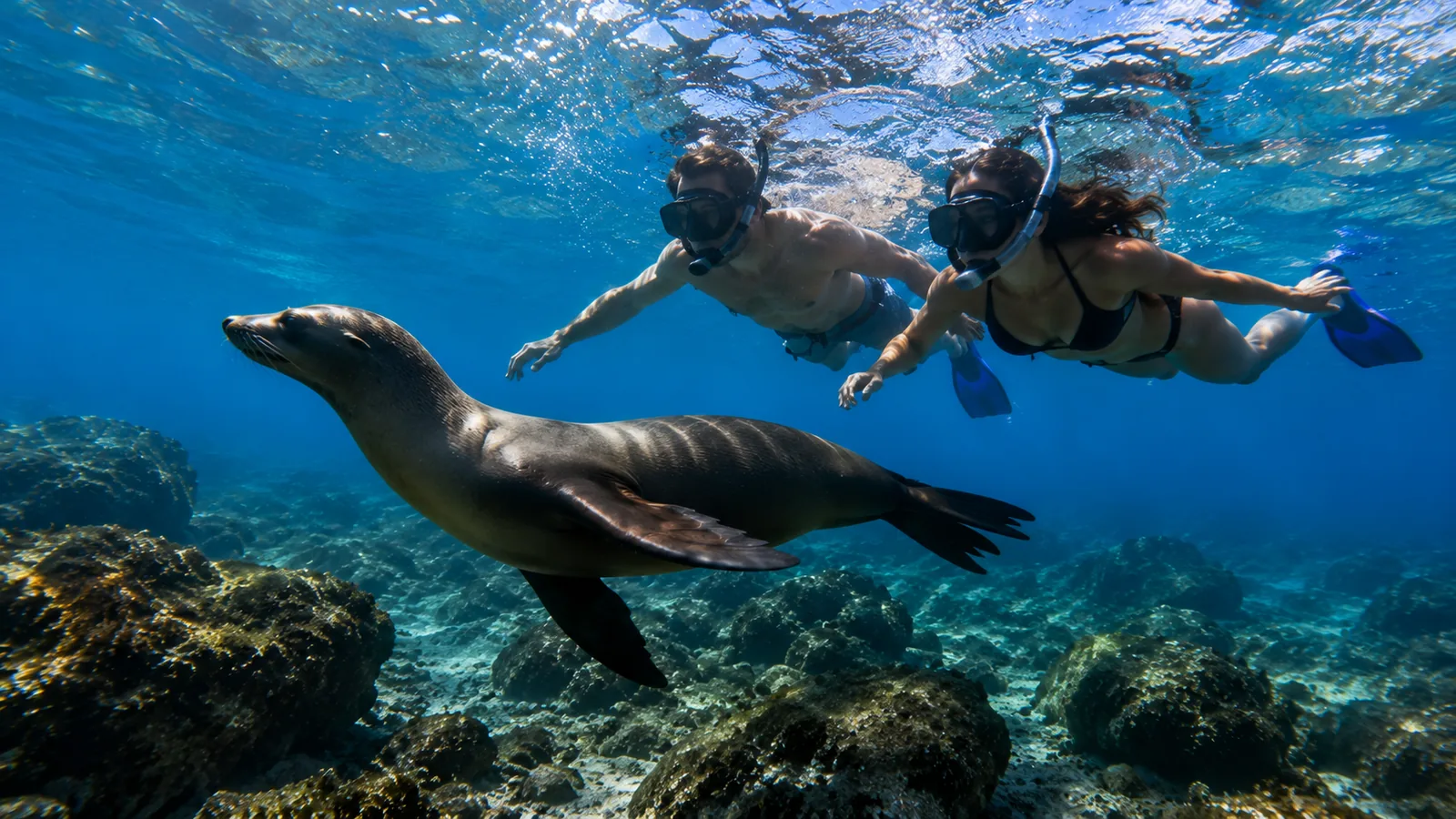
Galápagos Sea Lion
Playful sea lions are often the first marine animals visitors meet. Give them space on beaches and let them decide whether to approach while you snorkel.
Wild fact: They can sleep in the water.
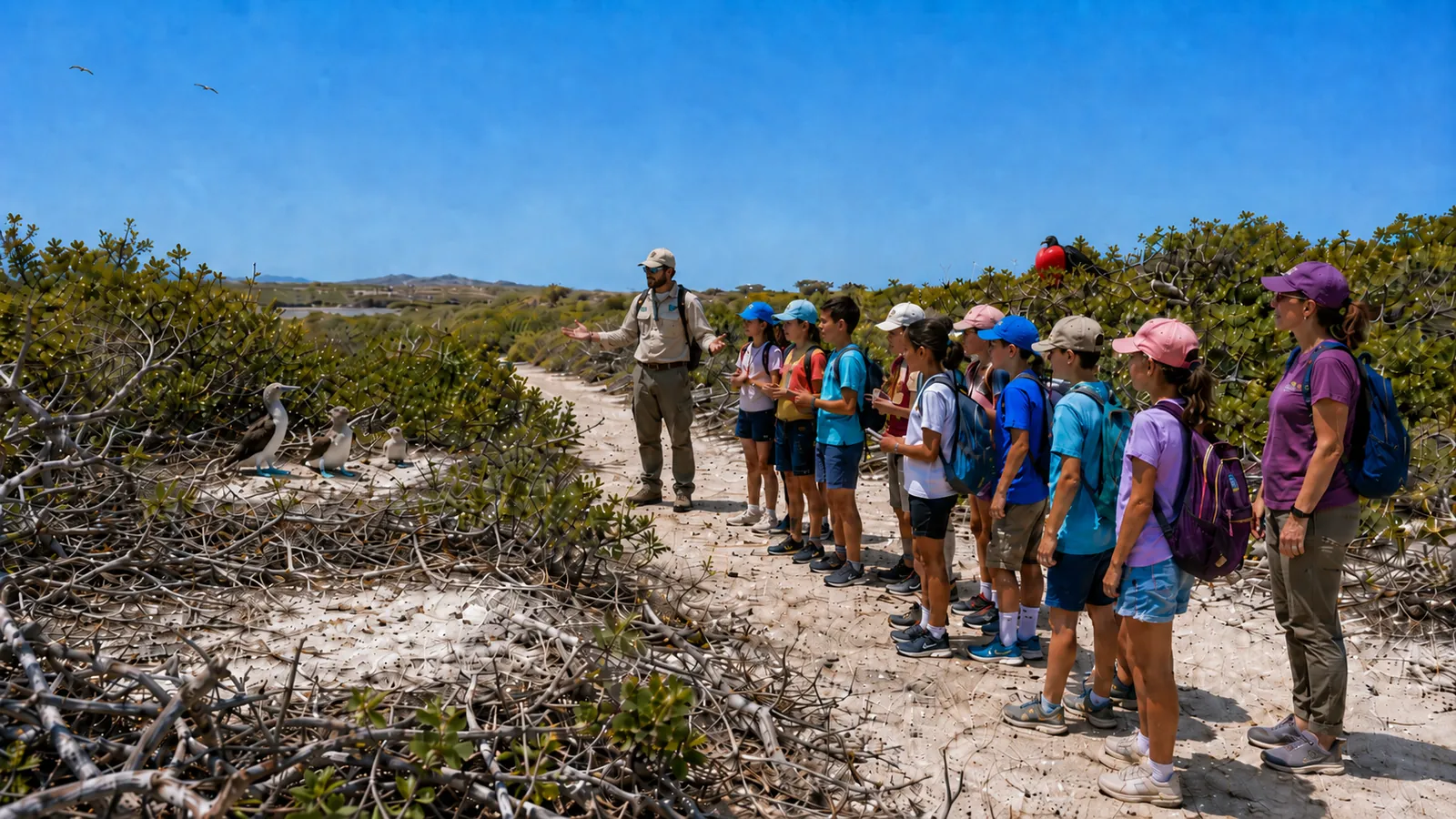
Blue-footed Booby
An unmistakable coastal bird with bright blue feet and a funny courtship dance. Look for them on rocky shores and nesting areas.
Wild fact: Bluer feet can mean a healthier bird.
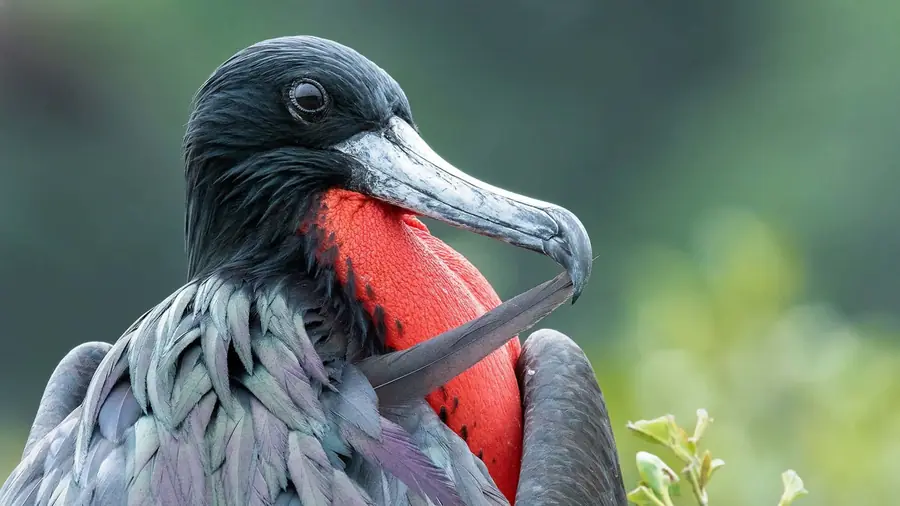
Frigatebird
Frigatebirds glide above boats with enormous wings and barely need to flap. Males are famous for their bright red throat pouch during courtship.
Wild fact: Their feathers are not waterproof.
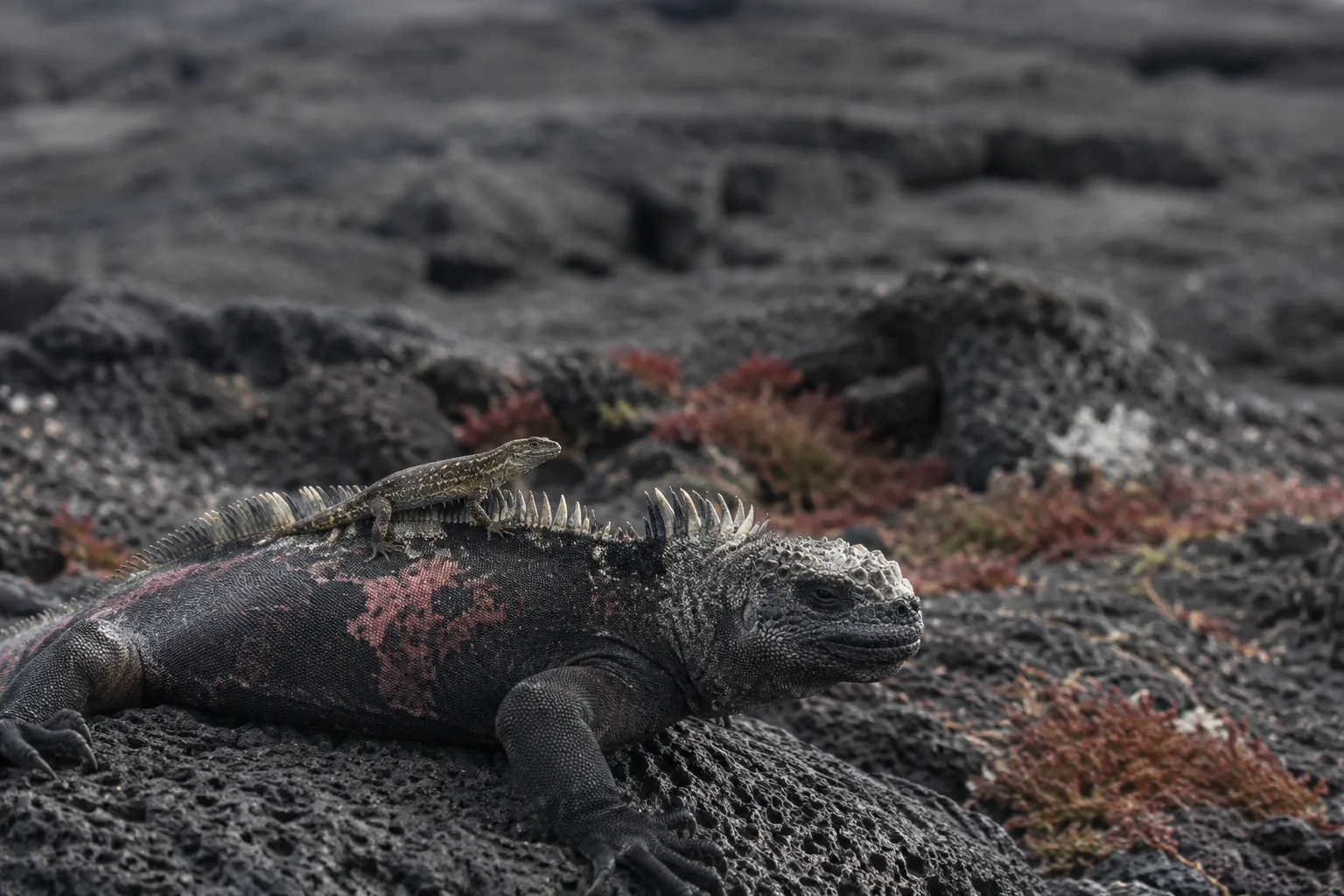
Lava Lizard
Small, fast and perfectly matched to volcanic ground, lava lizards are easy to spot along trails. Different islands have their own forms.
Wild fact: They communicate with quick head bobs.
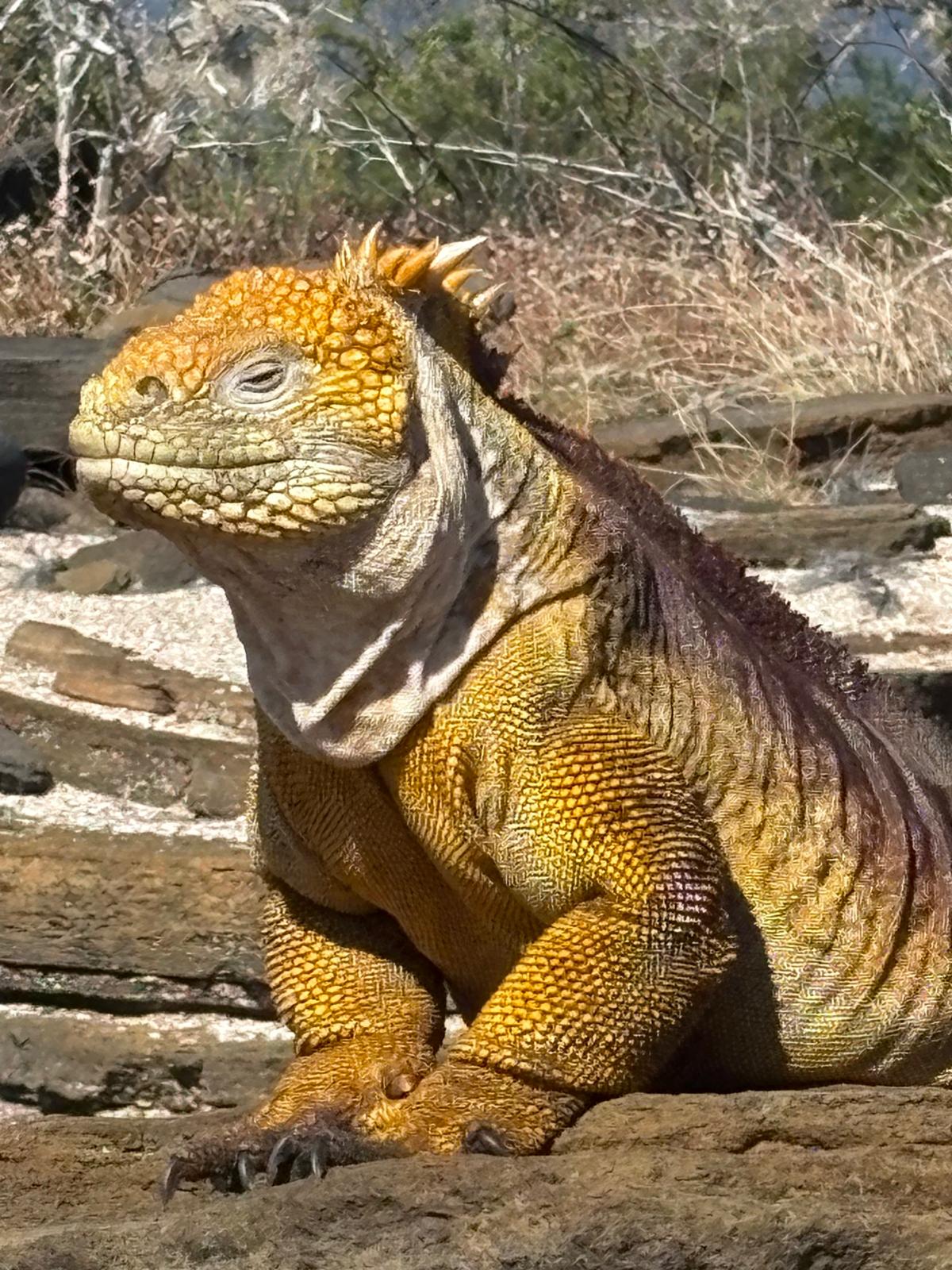
Yellow Land Iguana
These golden reptiles rest in sunny dry forests and walk surprisingly slowly through cactus country. Keep a respectful distance and never feed them.
Wild fact: They can live for decades.
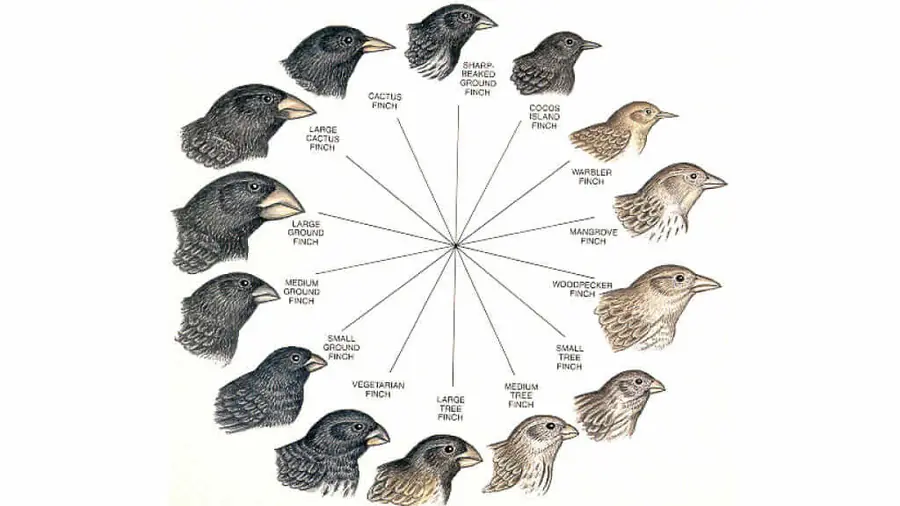
Darwin’s Finch
Darwin’s finches are small birds with beaks shaped for different foods. Their diversity helped inspire Charles Darwin’s ideas about evolution.
Wild fact: Each beak is a different kind of tool.
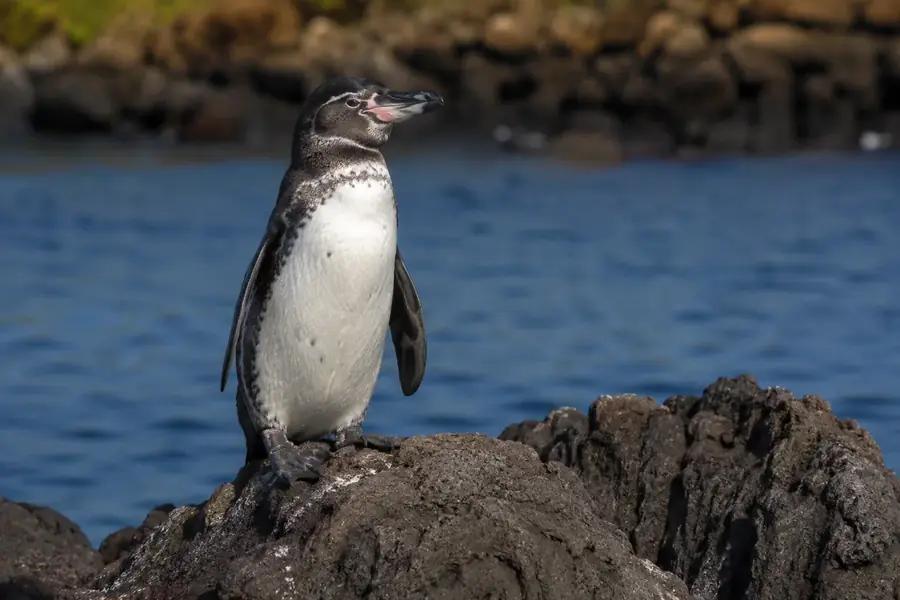
Galápagos Penguin
The only penguin living north of the Equator. It is small, quick underwater and often spotted around Isabela and Bartolomé.
Wild fact: It cools down in shade during hot hours.
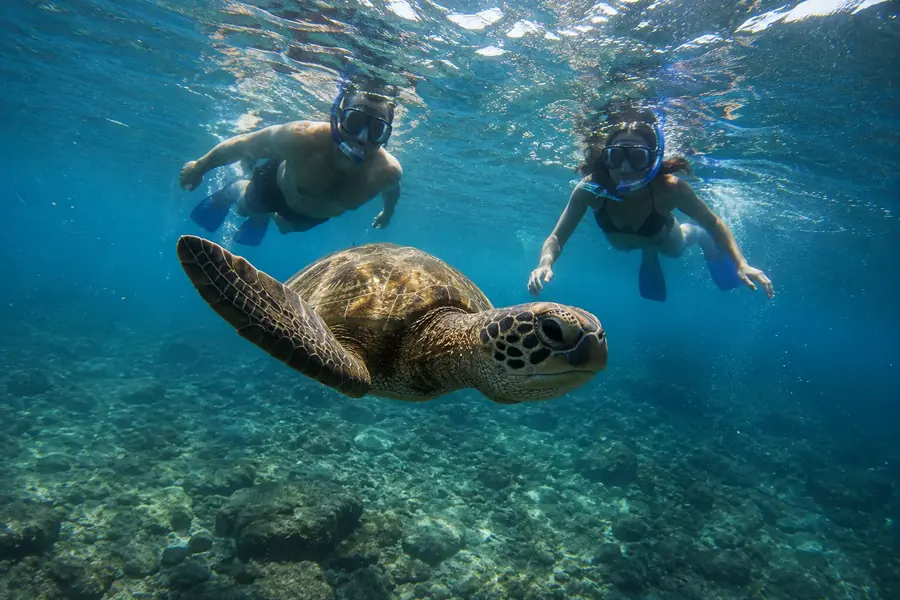
Green Sea Turtle
Sea turtles glide through bays, mangroves and clear snorkeling sites. Watch quietly from a distance and never touch them.
Wild fact: They return to nest near where they were born.
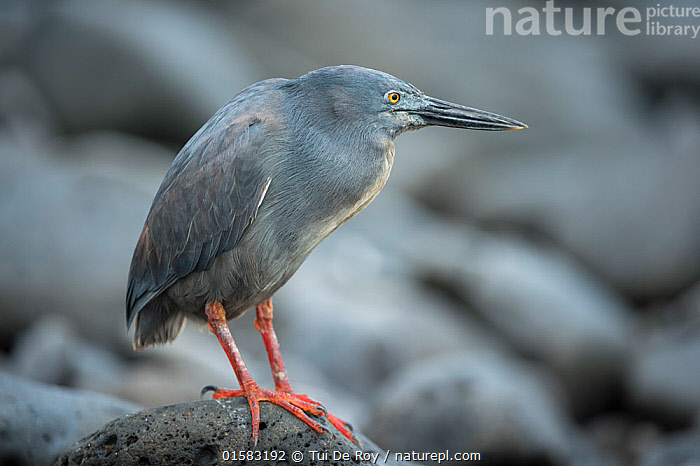
Lava Heron
This compact grey heron blends so well with lava that it can look like a rock until it moves. Look slowly beside tide pools.
Wild fact: Stillness is its best camouflage.
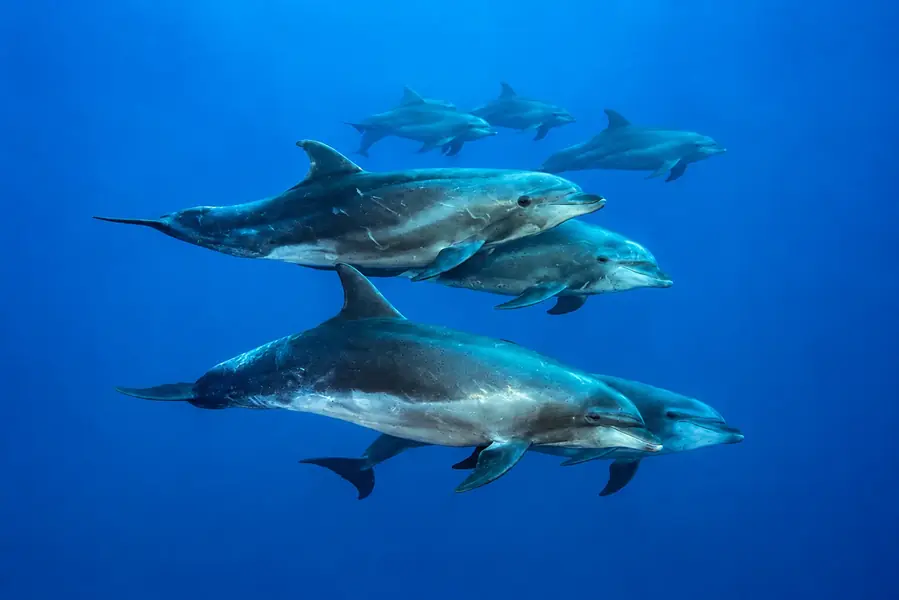
Dolphin
Dolphins sometimes race alongside boats and leap through the waves. Seeing them from a boat is one of the most joyful surprises in the Galápagos.
Wild fact: Dolphins use sound to explore their world.
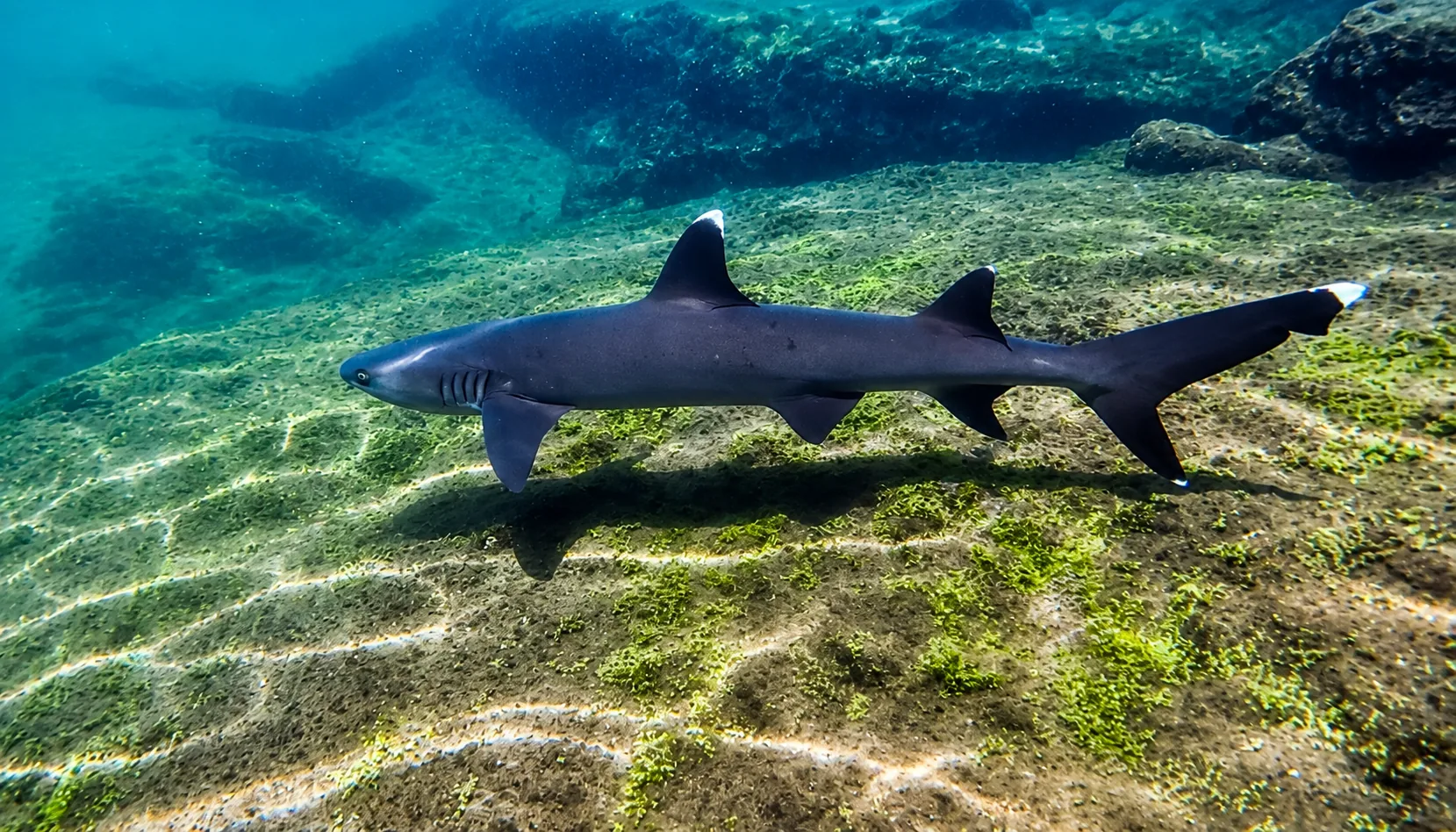
White-tip & Black-tip Sharks
These sharks may be seen around reefs, shallow channels and clear snorkeling water. They are part of a healthy ocean and should always be observed respectfully.
Wild fact: White-tip reef sharks often rest during the day.
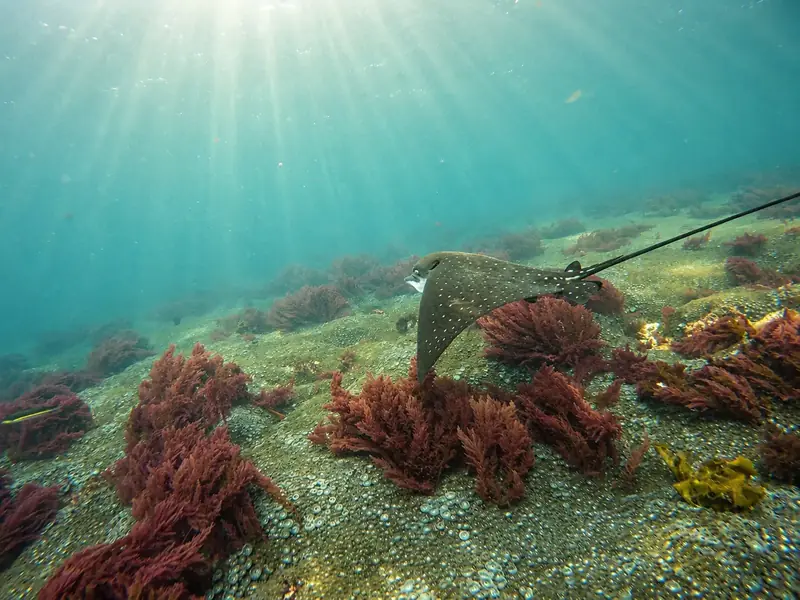
Golden Ray
Rays glide gracefully above sandy bottoms and reefs. Spotting one feels like watching a bird fly underwater.
Wild fact: Rays are relatives of sharks.
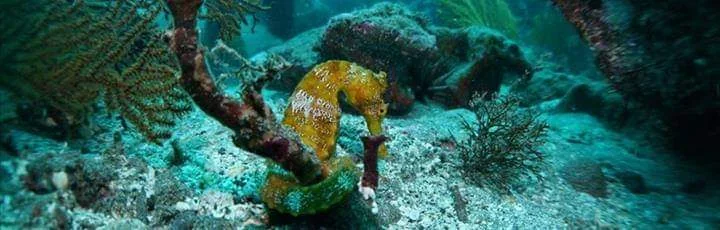
Pacific Seahorse
Seahorses are masters of camouflage and can hide among algae, coral and mangrove roots. Look closely and patiently.
Wild fact: The father carries the babies.
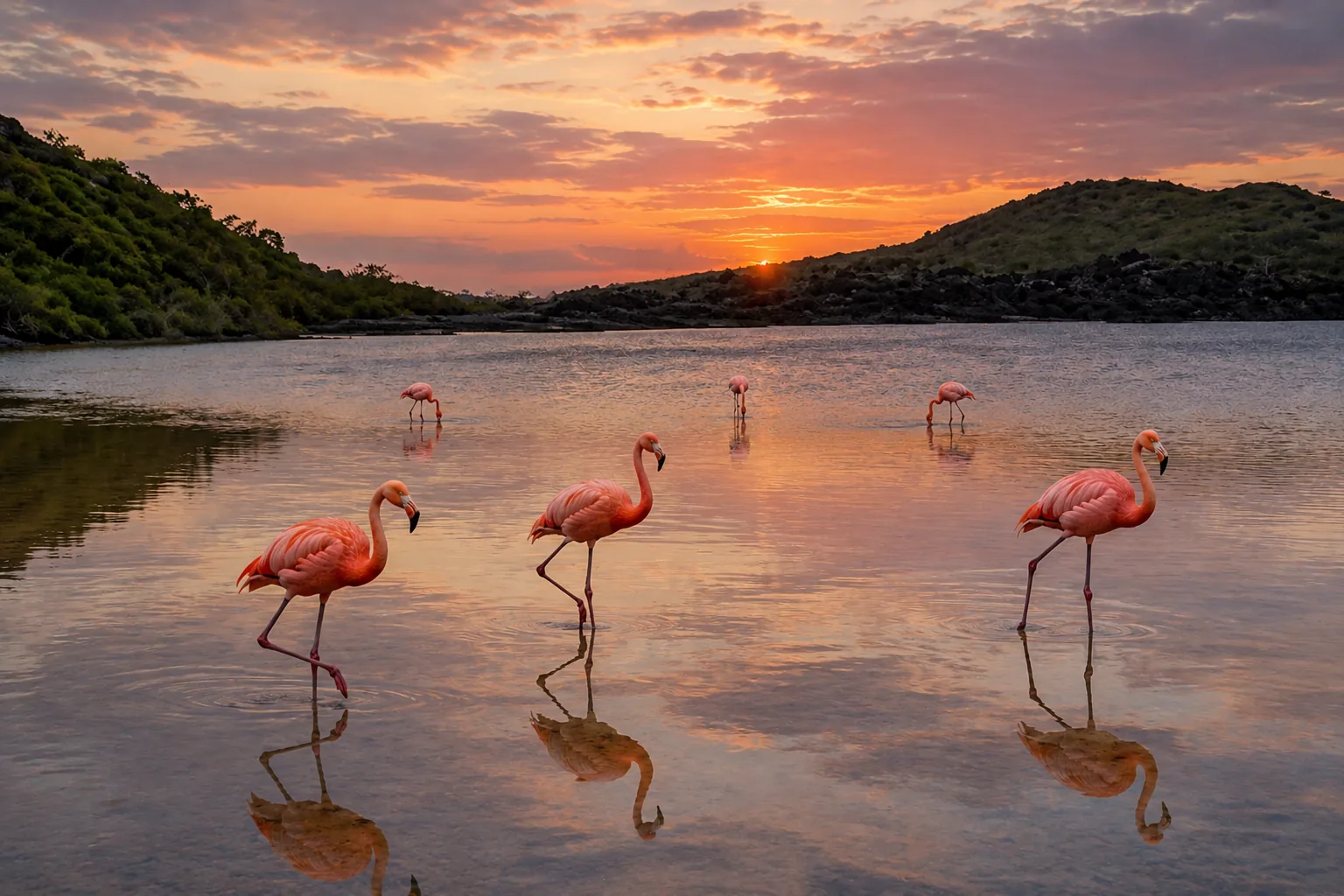
Galápagos Flamingo
Flamingos gather in salty lagoons, especially on Isabela and Floreana. Their pink color comes from tiny organisms in their diet.
Wild fact: They often stand on one leg to rest.
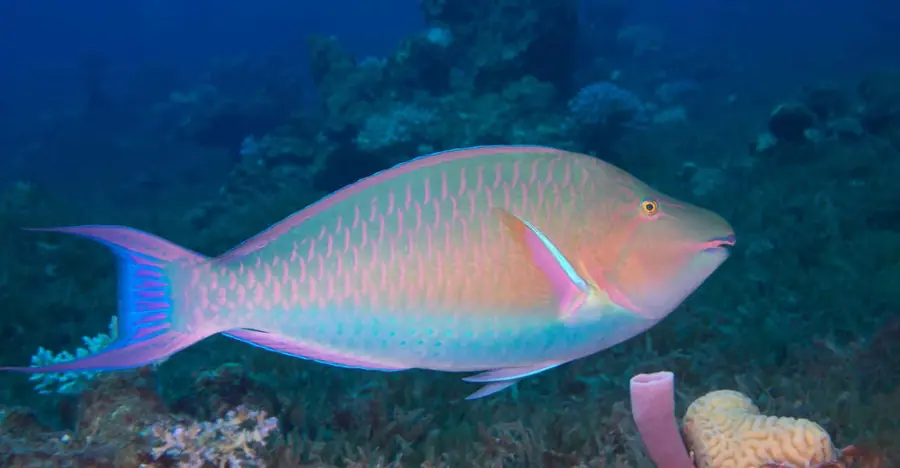
Parrotfish
Bright parrotfish use beak-like mouths to nibble algae from reef surfaces. Their colors can be spectacular underwater.
Wild fact: Their feeding helps create sand.
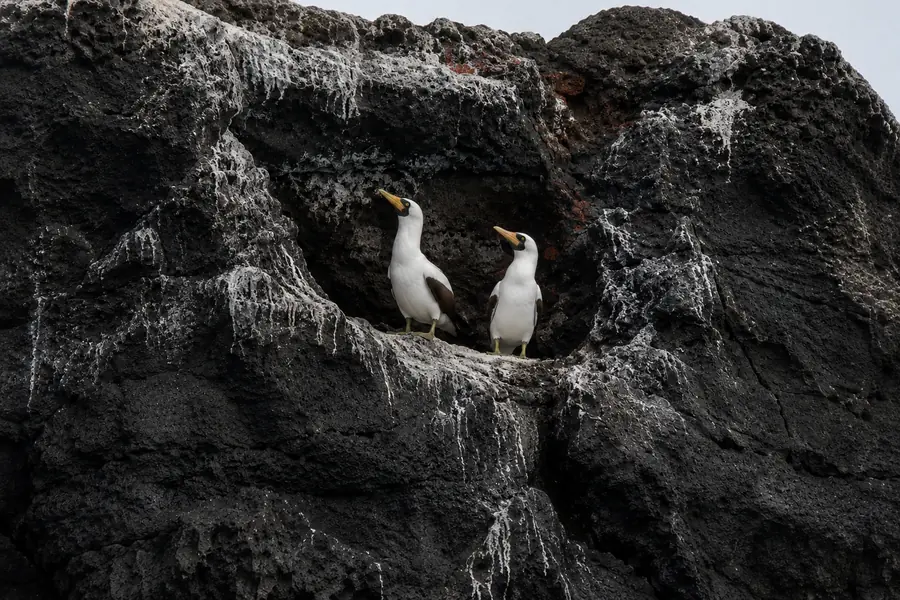
Nazca Booby
A large white seabird with a bright orange bill and dark face mask. Look for colonies on rocky islands such as Española and Genovesa.
Wild fact: They nest directly on the ground.
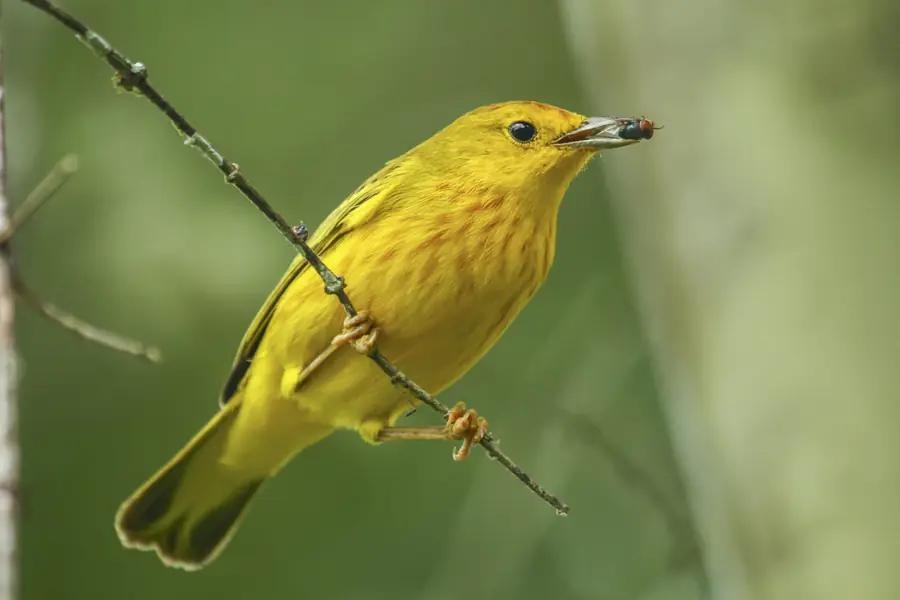
Yellow Warbler
A bright little yellow bird that is easy to notice in bushes, gardens and dry forests. Listen for its lively song as you walk through the islands.
Wild fact: Its yellow feathers help it stand out among green leaves.
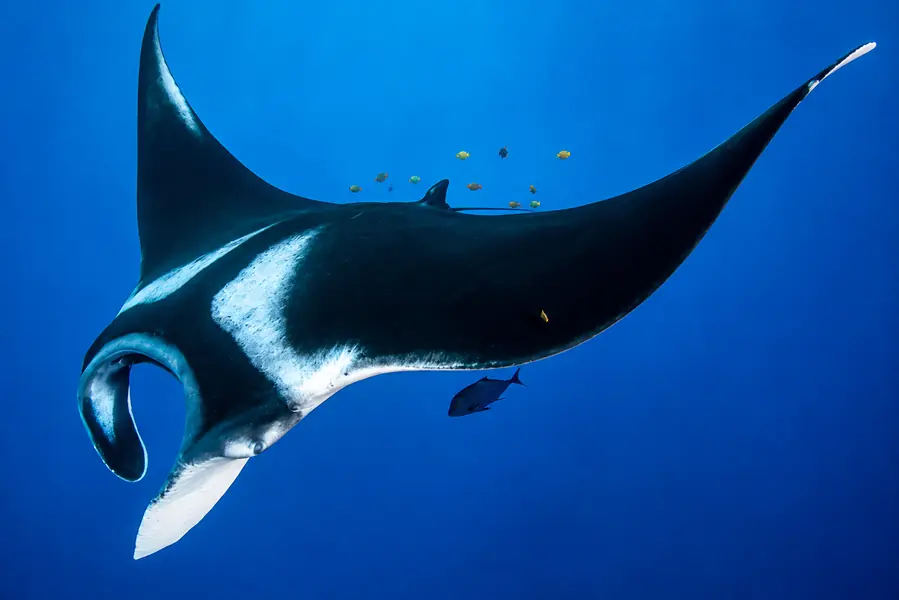
Manta Ray
Gentle giant rays can glide through open water with slow, graceful wing-like movements. Seeing one is rare, exciting and never guaranteed.
Wild fact: Manta rays are relatives of sharks.
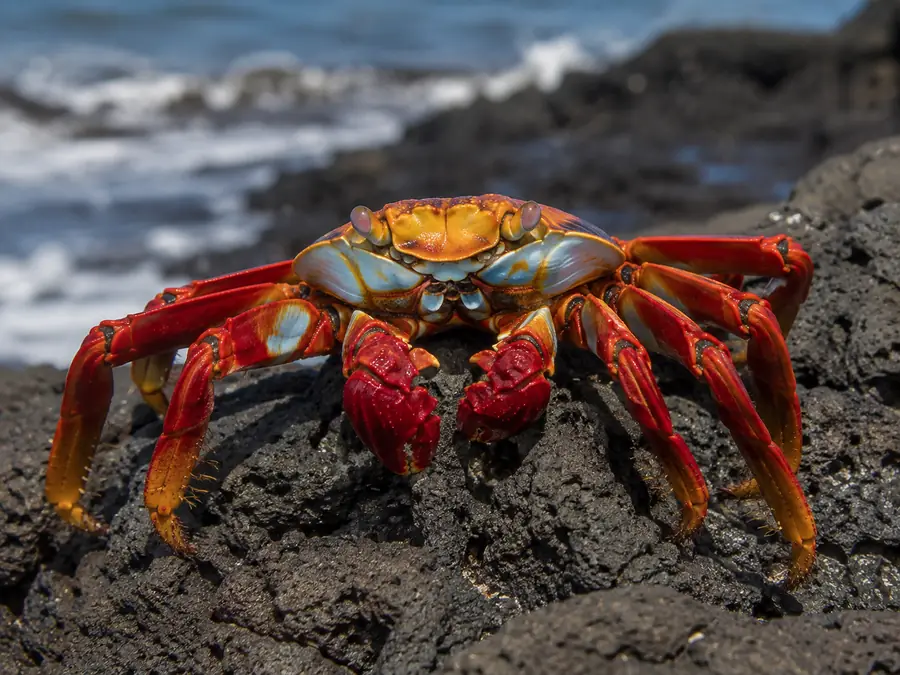
Galápagos Red Crab
These bright red crabs move quickly across rocks and shorelines. Look carefully at tide pools and lava coasts, where they help keep the shore healthy.
Wild fact: Their color makes them easy to spot against black lava.
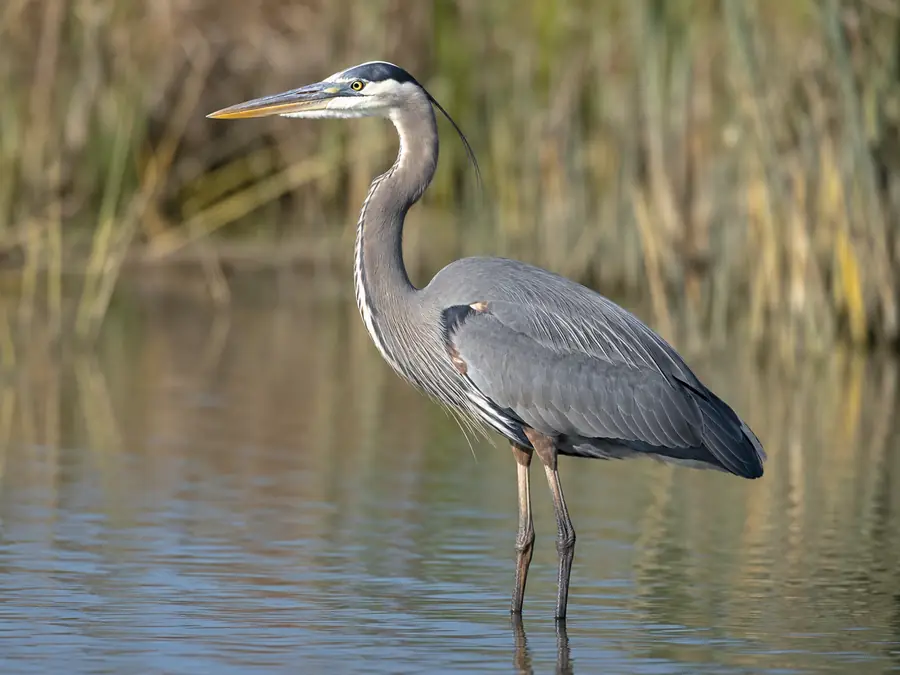
Great Blue Heron
A tall, patient hunter often seen near lagoons, mangroves and rocky shores. It stands very still before striking quickly for fish.
Wild fact: Its long neck folds into an S-shape when it flies.